September can be a surprisingly demanding time on the body.
In Ottawa and Gatineau, the long days of summer begin to shorten. Mornings become cooler while afternoons can still be hot. Children return to school, adults return to fuller work schedules, meals become rushed again, and many families suddenly find themselves exposed to more people — and more coughs, colds and viruses.
At the same time, late summer and early fall are an important allergy season in our region. Ragweed is widespread throughout both Ontario and Quebec, and its pollen typically becomes most significant from August into September and can persist until the first frost. Ottawa pollen monitoring identifies August through late September as the period when high ragweed counts commonly occur.
For many people, this transition shows up as a mixture of:
- nasal congestion, sneezing or itchy eyes
- headaches or sinus pressure
- bloating or digestive upset
- fatigue or heaviness
- difficulty concentrating
- changes in appetite or bowel movements
- feeling run-down as schedules become busier
- frequent colds once children return to school
- difficulty adjusting to cooler, darker days
One of the main principles of Chinese medicine explores how our body’s adapt to its environment. This includes our home environment, work environment, cultural environment and also the climate and seasonal changes of where we live.
For thousands of years, Chinese medicine has been thinking about how to harmonize our body’s during seasonal transitions – which can be some of the most vulnerable times for our health.
And interestingly, it places digestion and our gut microbiome at the centre of the conversation.
The Season Between Seasons
Classical Chinese medicine describes five phases of nature: Wood, Fire, Earth, Metal and Water.
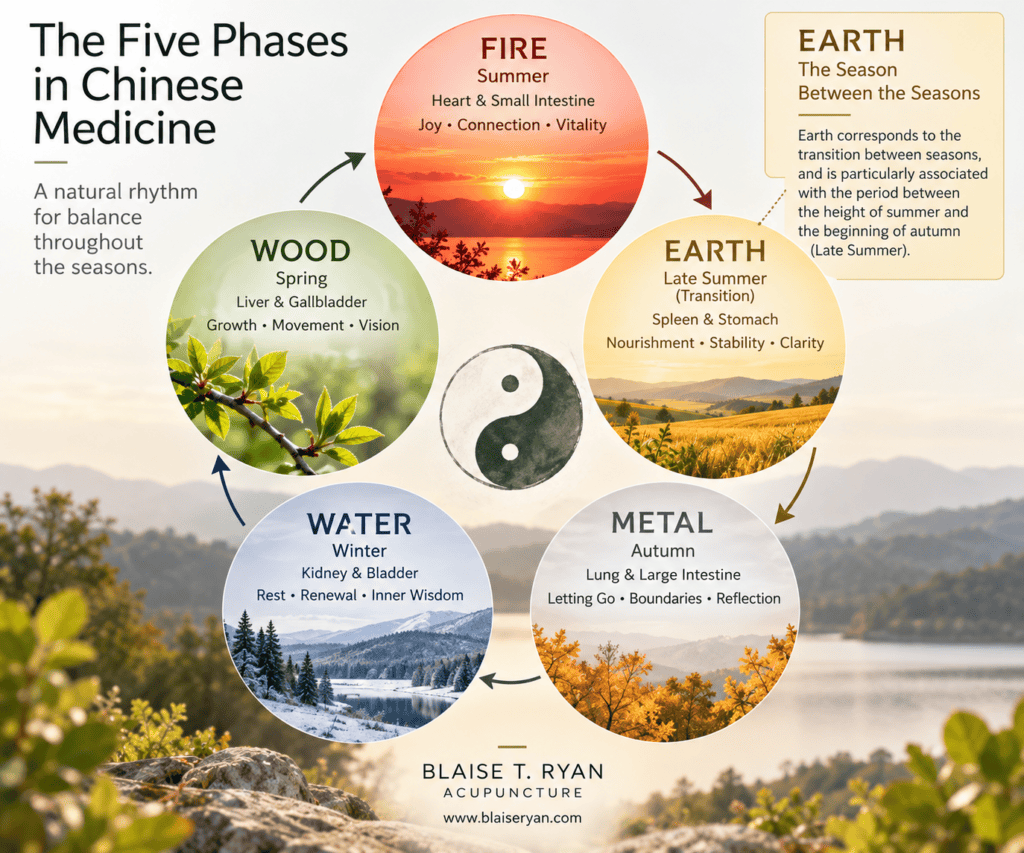
Each one of these phases correlates with a season. While we usually think in terms of four seasons, Chinese medicine traditionally associates Earth with the transition between seasons, and particularly with the period between the height of summer and the beginning of autumn.
This is sometimes translated as “Late Summer.”
In Ottawa and Gatineau, our climate does not necessarily behave according to an ancient Chinese calendar. September here can give us a hot, humid afternoon, a cold dewy morning, heavy rain and a sudden temperature drop within a remarkably short period.
Periods of transition require adaptation.
The Huang Di Nei Jing (Yellow Emperor’s Inner Classic), one of the foundational texts of Chinese medicine, repeatedly emphasizes that health depends greatly upon our ability to adapt our behaviour, food, rest and activity to changes in the natural environment.
In modern Ottawa, we could think of this less as a particular date on the calendar and more as the summer-to-fall transition.
And that transition is happening all around us. The sun is setting earlier and the leaves are already shifting.
Why Chinese Medicine Focuses on Digestion at This Time
The Earth phase is associated with the Spleen and Stomach system (our Gut Microbiome)
These terms don’t correspond exactly to the anatomical spleen and stomach described by Western medicine. In Chinese medicine, they describe a broader functional system concerned with our ability to receive food, transform it, extract nourishment from it and distribute that nourishment throughout the body.
According to Chinese medicine, Spleen and Stomach create all the Qi (energy) and Blood for the body.
In simple terms:
How well are you turning what you eat into the energy your body needs?
Classical Chinese medicine considers the Spleen and Stomach so important that later physicians developed an entire school of thought around protecting digestive function. Our clinical approach at our Ottawa acupuncture clinic is strongly influenced by this school of thought.
The influential physician Li Dong-yuan (1180–1251) argued in his Treatise on the Spleen and Stomach that damage to the digestive centre could contribute to weakness and illness throughout the body.
That idea is particularly relevant to modern life.
We may have access to more food than almost any previous generation, yet many of us eat while driving, working at our computers, answering emails, scrolling our phones or rushing children out the door.
From a Chinese medicine perspective, what we eat matters — but so does the state in which we eat it.
Specifically, how we eat, how it’s cooked, how the food is combined, the portions, and also when we eat is very important to the health of our Spleen and Stomach.
Back to School Is Also a Change in the Body’s Rhythm
Think about what happens to many families around Ottawa and Gatineau in September.
Breakfast becomes earlier.
Lunch goes into a container.
Children return to classrooms.
Parents return to more structured work schedules.
Commutes get longer.
Dinner may happen later.
Bedtimes change.
There is less daylight.
And suddenly everyone is sharing indoor spaces again.
The body’s rhythms have to adjust remarkably quickly.
This is one reason we often encourage patients at our Ottawa acupuncture clinic to think about autumn health before they actually become sick.
| The famous traditional Chinese medicine proverb from the Yellow Emperor’s Classic states: “The superior doctor prevents sickness, the mediocre doctor attends to impending sickness, and the inferior doctor treats actual sickness.” |
Chinese medicine has traditionally placed considerable emphasis on prevention: strengthening what is weak, harmonizing imbalances, and unblocking what is stuck before symptoms become chronic.
Allergies: Why September Matters in Ottawa and Gatineau
There is also a very local reason to pay attention to your health right now.
This is ragweed season.
Ragweed is widespread in the Outaouais, and Quebec public-health information identifies it as the principal cause of seasonal rhinitis in the province. Quebec estimates that roughly one in five people experiences seasonal rhinitis.
Ottawa monitoring shows a similar seasonal pattern: ragweed pollen generally begins appearing in late July, with the highest counts commonly occurring from August through late September.
For susceptible people, that can mean weeks of sneezing, congestion, watery or itchy eyes, sinus discomfort and fatigue.

How does Chinese medicine look at seasonal allergies?
Chinese medicine does not describe allergies using the modern concept of IgE-mediated immune reactions to pollen.
Instead, we look at the pattern expressed by the individual patient.
Two people can arrive at the clinic with the same Western diagnosis of seasonal allergic rhinitis and receive different acupuncture treatments.
One may present predominantly with congestion and clear discharge. Another may have intense itching and red eyes. Another may experience allergies alongside digestive weakness, fatigue and loose stools.
Treatment therefore isn’t simply:
“Which acupuncture point treats allergies?”
The more useful question is:
“Why is this particular person reacting this way, and what systems appear to be out of balance?”
This individualized approach is one of the main principles of Traditional Chinese Medicine.
What Does Digestion Have to Do With Immunity?
In modern Western medicine, the digestive and immune systems are also understood to be closely interconnected through the microbiome, although through very different physiological models than what we use in Chinese medicine.
From the Chinese medicine perspective, a strong Earth element means a strong digestive function and results in a lot of Qi and Blood, which nourish the body’s tissues and support our ability to adapt to the environment.
That is why September and fall acupuncture and Chinese medicine treatments will often involve more than simply treating a stuffy nose.
We may also ask about:
Appetite, bowel movements, sleep, energy, stress, temperature, menstrual cycles, food cravings and how you feel after eating.
Those clues help us understand what patterns of imbalance are causing your symptoms.
Five Simple Ways to Support Yourself During the Summer-to-Fall Transition
1. Start shifting toward warmer, cooked foods
Summer naturally brings salads, smoothies, cold drinks and raw garden vegetables.
As mornings cool, Chinese dietary therapy traditionally recommends gradually shifting toward more cooked and warming meals.
You don’t need to abandon fresh vegetables.
Try roasting, steaming, sautéing or adding them to soups and stews.
Squash, carrots, sweet potatoes, oats, rice, millet, lentils and gently cooked seasonal vegetables can make excellent transitional foods.
2. Make breakfast easier to digest
A cold smoothie grabbed while running out the door may be convenient, but it isn’t the only quick breakfast.
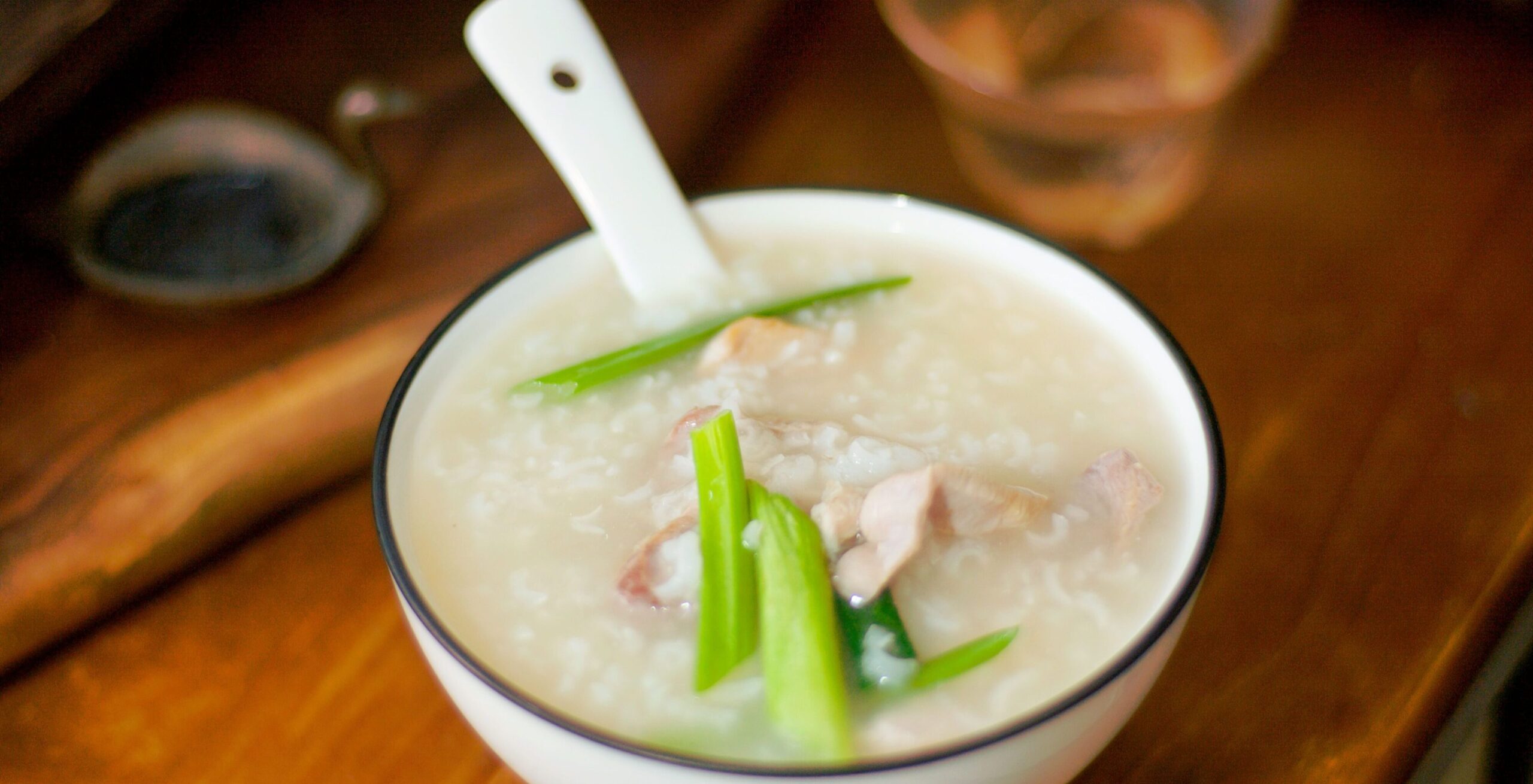
Try warm oatmeal, eggs and toast, leftover soup, congee or another simple cooked breakfast.
For people who regularly experience bloating, fatigue or loose stools, we often find that simply changing how and when they eat can sometimes be more important that obsessing over individual ingredients.
| TRY CONGEE A simple Chinese medicine breakfast 1 cup rice + 6–8 cups water or broth Simmer 60–90 minutes until soft and creamy. Cold or sluggish? Add ginger or cinnamon. More nourishment? Add egg, tofu or vegetables. Heavy or bloated? Keep it simple with ginger and vegetables. Sweeter breakfast? Add cooked apple or pear with cinnamon. |
3. Give yourself ten quiet minutes to eat
You do not need a perfect mindful-eating ritual.
Put down the phone.
Step away from the computer.
Sit down.
Breathe.
Taste & Chew.
Ten relatively calm minutes is considerably different from eating while your nervous system is simultaneously trying to answer emails, navigate traffic or manage three other tasks.
4. Take a gentle walk after meals
A short walk after dinner can be one of the simplest ways to transition from the intensity of the day.
Chinese medicine values gentle movement for supporting the circulation of Qi.
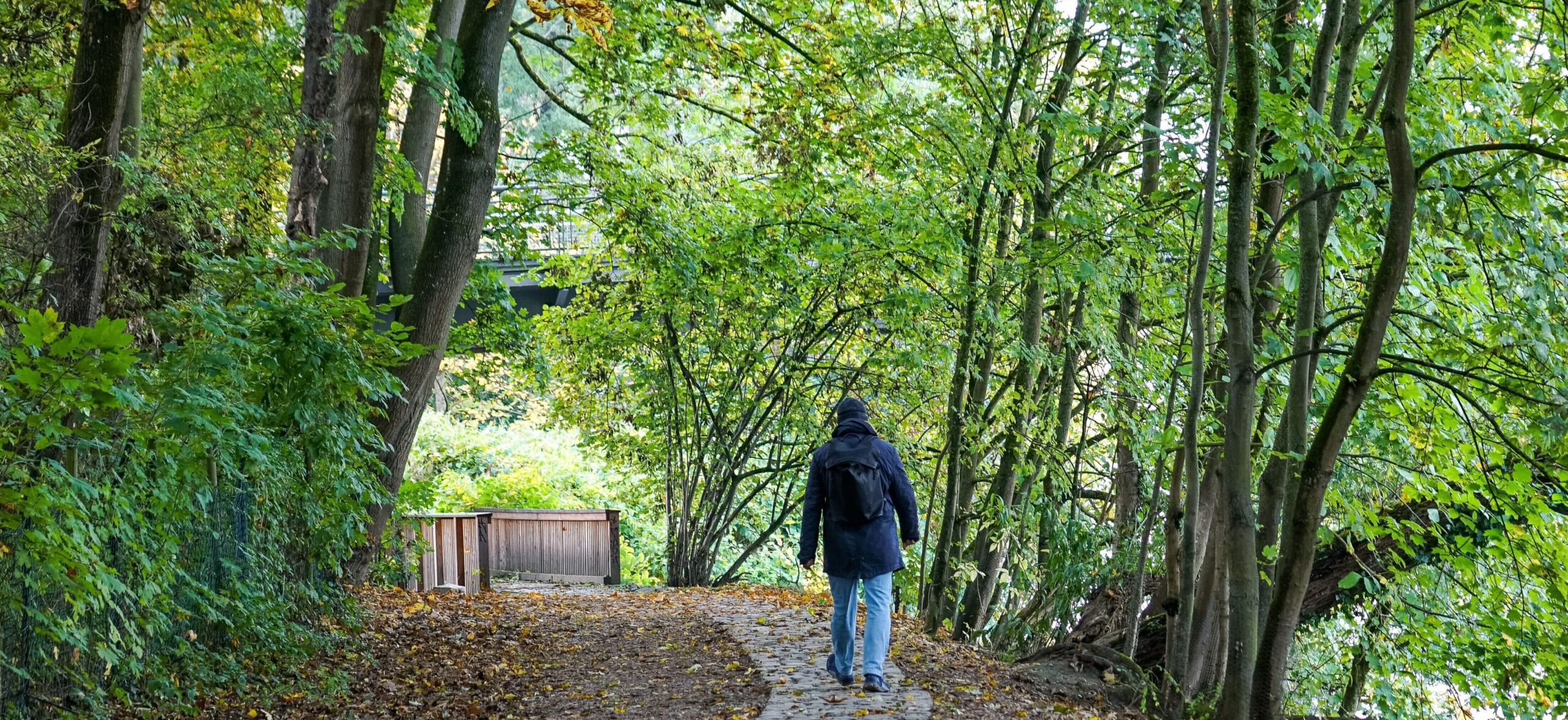
Focus on these three things during your walk:
- Breathing easily and gently
- Relaxing your eyes and gazing around your environment. Don’t focus on any specific thing, let your eyes appreciate the natural beauty around you.
- Be conscious of the movement in your limbs and let your arms swing slightly more than usual.
This is not a workout. Ten or fifteen minutes is enough to create an after-lunch-ritual that will harmonize your digestion, strengthen your Spleen and increase your Qi.
5. Don’t wait until you’re exhausted to slow down
Summer encourages outward activity.
Autumn begins the movement in the opposite direction.
The days shorten. Temperatures fall. Plants begin directing their energy inward.
Traditional Chinese seasonal living suggests that we should gradually do the same.
That doesn’t mean becoming inactive.
It means recognizing that September does not necessarily need to operate at the same pace as July.
A Simple Breathing Practice for Busy Days
One of the simplest practices we recommend costs nothing and takes less than two minutes.
Sit comfortably and allow your abdomen and lower ribs to relax.
Instead of deliberately taking the biggest breath possible, breathe gently through your nose and notice your lower ribs expanding sideways.
Allow the exhalation to happen naturally.
Repeat for several breaths.
This can be particularly useful before eating, before bed or after arriving home from work.
Think of it as creating a small transition between doing and resting, and between resting and doing.
Relax Your Eyes Too
Modern life asks our eyes to do something human beings historically did far less often: focus on something close to our face for hours at a time.
Computers, phones, paperwork and indoor environments dominate much of the workday.
Periodically look away from your screen and allow your gaze to rest on something farther away — ideally outdoors.
In Chinese medicine, excessive eye strain and too much mental work and concentration can weaken the Spleen and Stomach and contribute to fatigue.
Sometimes the healthiest intervention available during a workday is remarkably simple: Look out the window.
5 Ingredients to Support Your Digestion (Spleen) This Fall
Chinese dietary therapy doesn’t have to mean complicated recipes or unfamiliar ingredients. These five everyday foods can be incorporated into meals as the weather cools to help warm and support digestion, encourage the movement of Qi, and prevent the accumulation of Dampness.
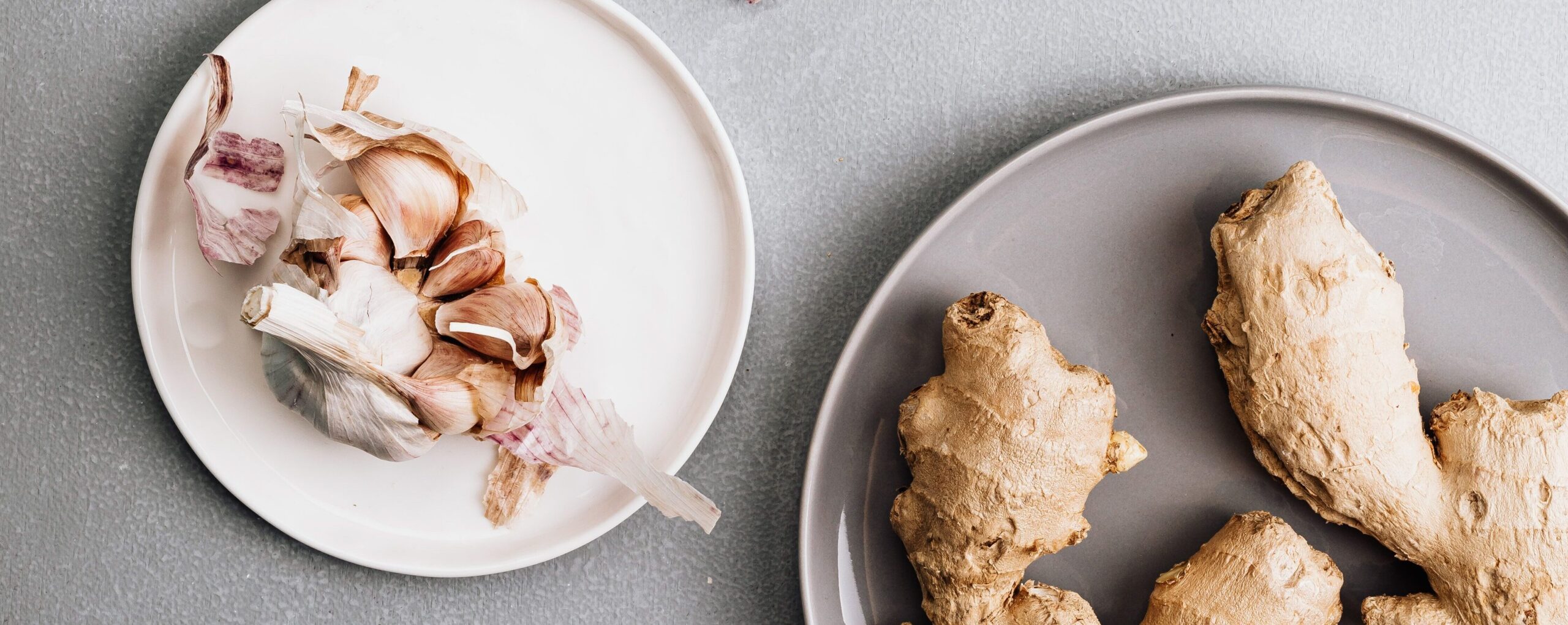
1. Ginger
Add fresh ginger to soups, stir-fries, curries or hot water with lemon. A few slices added while cooking beans, lentils or heavier meals can also make them feel more warming and digestible.
Ginger warms the middle, supports the Spleen and Stomach, and helps transform Cold and Dampness.
2. Cinnamon
Sprinkle cinnamon into oatmeal, baked apples or squash, or simmer a small cinnamon stick in tea. It pairs particularly well with the warmer cooked foods we naturally begin eating in fall.
Cinnamon is warming and helps encourage circulation of Yang and Qi—particularly useful for people who tend toward coldness and sluggish digestion.
3. Turmeric
Add turmeric to soups, lentils, rice, roasted vegetables or curries. Try sautéing it gently with ginger and a little oil before adding the rest of your ingredients.
Helps address the stagnation that sometimes accompanies a sluggish, heavy digestive pattern and helps improve the Liver’s efficiency.
4. Garlic
Cook garlic into soups, stews, sauces, roasted vegetables and stir-fries. As the weather cools, cooked garlic is an easy way to add warmth and flavour without making meals overly heavy.
Garlic is warming and dispersing and traditionally helps the digestive system deal with food accumulation and Dampness.
5. Honey
Use a small amount of good-quality honey to sweeten oatmeal, warm drinks or cooked fruit rather than relying on refined sugar. Think of honey as a condiment rather than a major ingredient.
Honey gently nourishes and harmonizes the Spleen and Stomach, but because sweet foods can contribute to Dampness when consumed excessively, a little goes a long way.
A simple rule for the season:
As Ottawa and Gatineau move into cooler weather, think warmer, cooked and gently spiced rather than dramatically changing your diet. Soups, stews, roasted vegetables, oatmeal and cooked grains provide easy opportunities to incorporate these ingredients while supporting the Spleen and Stomach according to Chinese dietary therapy.
How Chinese Medicine Connects Digestion, Dampness & the Lungs
One of the classic principles of Chinese medicine states:
“The Spleen is the source of Phlegm; the Lung is the vessel in which Phlegm is stored.”
In Chinese medicine, the Spleen and Stomach are responsible for transforming food and fluids into nourishment the body can use. When this transforming function becomes weak or overwhelmed, fluids may not be properly transformed and transported. They can accumulate as Dampness, which over time may thicken and develop into what Chinese medicine calls Phlegm.
Because the Spleen belongs to Earth and the Lung to Metal, this also illustrates the five phase traditional relationship between these two systems: Earth nourishes Metal.
This is one reason Chinese medicine doesn’t always look only at the lungs when someone experiences recurring mucus, congestion or certain patterns of cough. Depending on the individual, treatment may also focus on strengthening digestion, transforming Dampness and reducing the dietary habits that continually contribute to it
6 Foods to Limit During the Earth Season
Chinese dietary therapy doesn’t usually divide foods simply into “good” and “bad.” Instead, we look at how foods affect the body and whether they support—or challenge—our current constitution and the season.
During the transition from summer into fall, Chinese medicine traditionally places particular emphasis on the Spleen and Stomach. If digestion already feels sluggish, heavy or congested, reducing foods that contribute to Dampness, Phlegm or digestive stagnation can be just as important as adding nourishing foods.
Here are six categories to consider reducing:
1. Dairy
Milk, cheese, cream and ice cream are rich and nourishing, but in Chinese dietary therapy they can also be Damp- and Phlegm-forming, especially when consumed frequently. This may be particularly relevant for people who experience bloating, heaviness, loose stools, congestion or excess mucus.
2. Wheat & Refined Flour Foods
Bread, pastries, crackers, pasta and other flour-heavy foods can become quite dense and cloying when they make up a large part of the diet. You don’t necessarily need to eliminate wheat—simply vary your grains with foods such as rice, oats, millet or quinoa, particularly in warm, cooked meals.
3. Greasy & Fried Foods
French fries, deep-fried foods, greasy takeout and meals containing excessive oils are classic examples of foods Chinese medicine considers difficult for the Spleen and Stomach to transform. When eaten frequently, they may contribute to Dampness, heaviness, bloating and Food Stagnation.
4. Highly Processed Foods & Excess Additives
Candy, brightly coloured drinks, packaged snack foods, processed baked goods and many convenience foods can contain combinations of artificial colours and flavours, preservatives, emulsifiers, stabilizers, refined oils, excess sodium and added sugars. Rather than treating every additive as harmful, a useful principle is simply to reduce heavily processed foods with long ingredient lists and favour fresh, minimally processed foods whenever possible.
From a Chinese medicine perspective, the combination of concentrated sweetness, richness, oils and highly processed ingredients can be viewed as particularly conducive to Dampness and Phlegm when eaten in excess.
5. Excess Sugar & Sweets
Sweetness actually has an affinity for the Earth element and Spleen in Chinese medicine. Moderate natural sweetness can be nourishing—but excessive sugar is considered cloying and can contribute to Dampness. Reduce candy, desserts, sugary cereals and sweetened drinks, and enjoy naturally sweet foods such as squash, sweet potato, carrots, apples and pears instead.
6. Too Much Cold & Raw Food
Summer naturally invites salads, smoothies, iced drinks and raw vegetables. But as mornings become cooler, Chinese dietary therapy traditionally recommends gradually shifting toward warmer, cooked foods. Soups, stews, congee, roasted vegetables and warm breakfasts require less digestive effort from the Spleen and Stomach within the traditional TCM framework.
Keep It Simple
Less cold. Less greasy. Less processed. Less rich. Less excessively sweet.
More warm. More cooked. More whole. More simple. More nourishing.
As Ottawa and Gatineau move toward cooler fall weather, even a few small changes in how you shop, cook and eat can help bring your diet and gut microbiome into better alignment with the season. Which will help your digestion work more efficiently, reduce dampness and much and improve your immune resilience as the seasonal colds and viruses start to gain traction.
Chinese Herbal Medicine for Seasonal Support
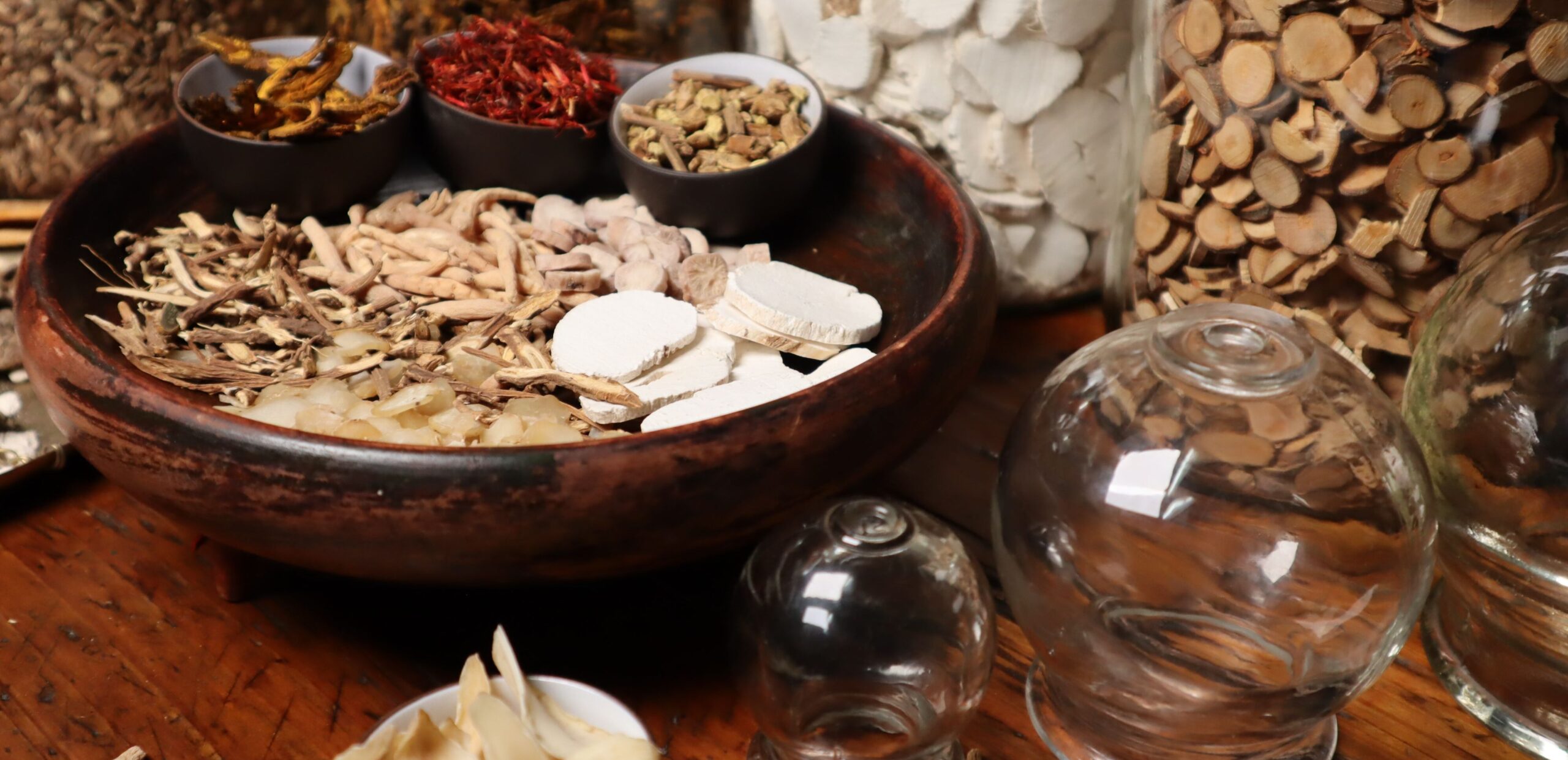
Food is one of the simplest ways to support the Spleen and Stomach, but sometimes the body needs a little more help. Chinese herbal medicine allows us to build on the same principles in a more targeted and individualized way.
Traditional formulas can be selected to strengthen Spleen Qi, support digestion, transform Dampness, regulate the Stomach, or warm the digestive system, depending on your individual pattern. During seasonal transitions, herbs may also be used to help prepare the body for the cooler, drier months ahead.
For example, someone who feels tired, bloated and heavy after meals may need a very different formula from someone experiencing reflux, constipation, dryness or excess heat. This is why we don’t recommend one universal “Spleen formula” for everyone.
TCM perspective: Herbal medicine can help strengthen the body’s centre while correcting the specific imbalances—such as Qi deficiency, Dampness, Cold or stagnation—that may be interfering with healthy digestion and adaptation to seasonal change.
A good seasonal approach: Rather than waiting until you’re feeling run down, ask your acupuncturist whether a short course of an individualized Chinese herbal formula could complement your acupuncture treatments as you transition into fall.
Where Acupuncture Fits In
At our acupuncture clinic in Ottawa, seasonal treatment is individualized rather than based solely on the calendar.
In order to get the best and lasting results, we focus on treating the root-cause imbalance in the pattern that is causing the symptoms to appear.
Depending on the person, an acupuncture treatment during this period might focus on harmonizing the Liver and Gall Bladder, or Strengthening the Spleen or the Lungs, or whatever the root-cause patterns are that are most relevant, while at the same time treating the symptoms of:
- seasonal allergies and sinus symptoms
- digestive complaints and bloating
- fatigue
- stress and nervous-system regulation
- headaches
- sleep disruption
- menstrual symptoms
- chronic pain aggravated by weather changes
- general wellbeing during periods of increased stress
For someone with seasonal allergies, treatment during symptom flare-ups may focus differently than preventative treatments before their usual allergy season begins.
Similarly, someone who becomes sick every autumn or winter may benefit from looking at their overall pattern and start treatments before hand in order to fix the underlying root-cause imbalance – rather than waiting for their symptoms to flare-up when the cold weather arrives.
Acupuncture can be used alongside appropriate conventional medical care; persistent or severe allergy, asthma, respiratory or gastrointestinal symptoms should be medically assessed.
Ancient Medicine, Modern Ottawa
The value of classical Chinese medicine isn’t that we need to live exactly as people did thousands of years ago.
We can’t.
Most of us aren’t going to organize our lives around an agricultural calendar. We have schools, offices, commutes, artificial lighting, smartphones, central heating, schedules and responsibilities that don’t care what season it is.
The more interesting question is:
Can ancient observations about human beings and the natural world still teach us something about how to live well now?
We think they can.
The transition from summer into fall is a useful time to pay attention to digestion, sleep, breathing, allergies, energy and the pace at which we’re living.
Eat a little warmer.
Slow meals down.
Walk after lunch.
Give your eyes a break.
Breathe.
Sleep when you’re tired.
Take some herbs.
And if your body seems to struggle every year when the seasons change, consider addressing the pattern with a Chinese medicine acupuncture treatment plan rather than simply enduring it again.
Prepare Your Body for Fall
If seasonal allergies, digestive issues, fatigue, stress, or changing weather tend to affect you at this time of year, this is a good opportunity to address your health before fall is fully underway.
Acupuncture in Ottawa & Gatineau
At Blaise T. Ryan Acupuncture, our registered acupuncturists use individualized treatments based on your symptoms, constitution and overall health. Whether you’re looking for support with a specific concern or simply want a seasonal tune-up, we can help determine the right approach for you.
Whether you’re looking for acupuncture for seasonal allergies, digestive concerns, stress, fatigue, pain or general wellness, treatment begins by understanding your individual pattern rather than simply treating a diagnosis.
Ready to prepare your body for the season ahead?
→ Book Your Acupuncture Appointment Online
Not sure if acupuncture is right for you? Book a complimentary 15-minute consultation with one of our registered practitioners.
We are open 7 days a week, including evenings.